Loading...

Adulting with Money? Start with the 50/30/20 Rule
Reviewed by: Fibe Research Team
- Updated on: 22 Jan 2026
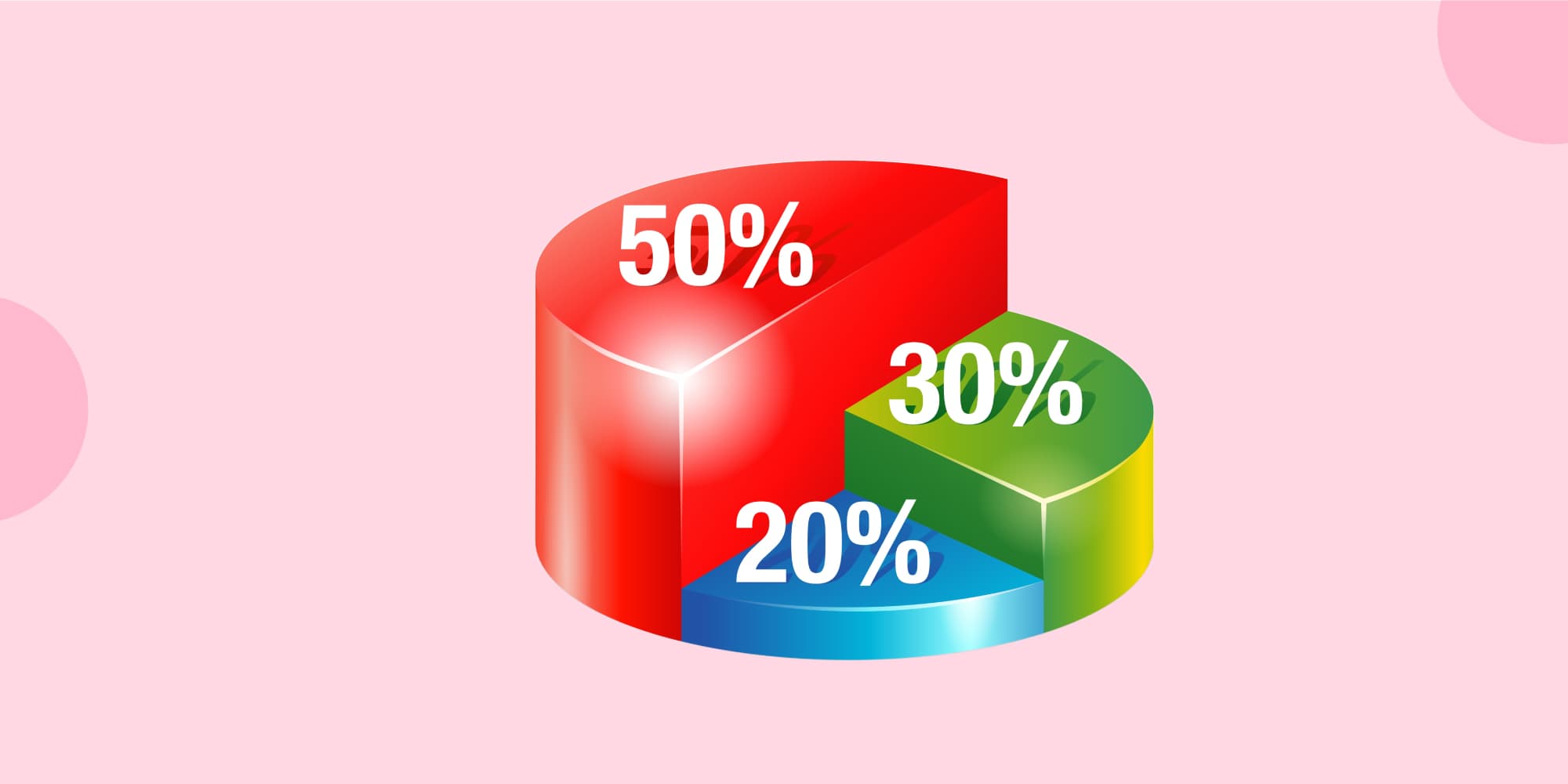
Managing money can feel overwhelming when expenses, EMIs and savings goals compete for your monthly income. This is where simple budgeting frameworks help. One of the most practical and widely used methods is the 50/30/20 rule.
Table of Contents
- Understanding the 50/30/20 Rule of Money
- What Should I Prioritise First: Emergency Fund or Investments?
- How Can I Track My Expenses to Follow the 50/30/20 Rule?
- Common Challenges With the 50/30/20 Rule
- How Fibe Helps You Stick to the 50/30/20 Rule
- Example: Applying the 50/30/20 Rule With Fibe Support
- Conclusion
- FAQs
Understanding the 50/30/20 Rule of Money
The 50/30/20 rule is a simple money management framework that divides your monthly income into three categories:
- 50% for needs
- 30% for wants
- 20% for savings and investments
This rule applies to your net (take-home) income, meaning income after tax and statutory deductions. The idea is to create balance between essential expenses, lifestyle spending and future financial security.
The 50/30/20 rule of money works because it focuses on proportions rather than exact amounts. Instead of tracking every expense closely, you allocate broad percentages to priorities. This makes budgeting easier to follow, especially for beginners or those with changing monthly expenses.
Breaking Down the 50/30/20 Rule Budget
50% for Needs
Needs include essential expenses that are necessary for daily living. These typically cover:
- Rent or home loan EMIs
- Groceries
- Utilities such as electricity, water and internet
- Insurance premiums
- Education fees
- Minimum debt repayments
Ideally, these expenses should not exceed 50% of your take-home income.
30% for Wants
Wants to cover lifestyle expenses that improve comfort and enjoyment but are not essential. These include:
- Dining out and food delivery
- Shopping for non-essential items
- Entertainment and subscriptions
- Travel and leisure
20% for Savings and Investments
The final portion focuses on long-term financial security. This includes:
- Emergency fund contributions
- Long-term investments
- Retirement planning
- Extra loan repayments
What Should I Prioritise First: Emergency Fund or Investments?
Before aggressive investing, it is advisable to build an emergency fund covering three to six months of expenses. This protects your finances from unexpected costs without disrupting long-term plans.
How Can I Track My Expenses to Follow the 50/30/20 Rule?
Tracking expenses helps you stay aligned with the rule. You can:
- Use budgeting apps
- Review bank statements monthly
- Categorise expenses manually
- Set spending alerts
Common Challenges With the 50/30/20 Rule
Despite its simplicity, the rule has limitations:
- High rent or EMIs may exceed 50 percent.
- Irregular income can affect consistency.
- Emergencies may disrupt savings.
- Lifestyle inflation can increase wants.
How Fibe Helps You Stick to the 50/30/20 Rule
Unexpected expenses often force people to dip into savings or break investments. Fibe helps prevent this.
With Fibe, you can access instant personal loans of up to ₹10 lakhs through a fully digital process. This allows you to manage emergencies without disturbing your savings or long-term plans.
Example: Applying the 50/30/20 Rule With Fibe Support
If your monthly take-home income is ₹50,000:
- ₹25,000 for needs
- ₹15,000 for wants
- ₹10,000 for savings
If an unexpected medical expense arises, using a personal loan from Fibe instead of savings helps keep your financial plan intact.
Conclusion
The 50/30/20 rule is a practical and sustainable way to manage money without complexity. By balancing needs, wants and savings, it helps build financial discipline and long-term security.
If you’re ever short of funds, the Fibe is here to help you. You can get cash up to ₹10 lakhs in just a few minutes. Enjoy a 100% digital application process and 0 foreclosure charges.
Download the Fibe app today for a quick apply!
FAQs
Why the 50/30/20 Rule Works for Most People?
The number one benefit of the 50/30/20 rule is its simplicity. It gives:
- Clear spending boundaries
- Flexibility without complexity
- Better control over lifestyle spending
For salaried professionals and young earners, it creates financial discipline without making money management stressful.
Is the 50/30/20 Rule Effective for Beginners?
Yes, the 50/30/20 rule is highly effective for beginners because:
- It is easy to understand.
- It does not require financial expertise.
- It encourages early saving habits.
- It reduces impulsive spending.
Is the 50/30/20 Rule Suitable for Someone With Multiple EMIs?
If you have multiple EMIs, essential expenses may exceed 50% temporarily. In such cases, the rule can be adjusted:
- Reduce spending on wants
- Focus on clearing high-interest debt
- Gradually move towards the ideal ratio
Share

Select Category
Recent blogs
Fixed Deposits vs. Government Bond: Which one is safer?
Fixed Deposit | 3 mins read
Fixed Deposit vs Certificate of Deposit: A Comprehensive Guide (2026)
Fixed Deposit | 3 mins read
Does Debit Card EMI Affect Credit Score? Here’s the Simple Truth
Personal Loan | 3 mins read
What is an EMI Bounce Charge and Why Does It Matter?
Personal Loan | 3 mins read
Our top picks
Can Millennial Stress be Resolved by Financial Wellness?
Finance | 3 mins read
How Organisations Can Measure the Impact of Financial Wellness Programs
Finance | 3 mins read
How Can HR help Overcome Staffing Challenges in the Digital Age?
Corporate | 3 mins read
5 Signs of A Good HR Function
Corporate | 3 mins read