How to Get an Instant Loan Without CIBIL Score
Written by: Fibe Research Team
Reviewed by: Fibe Research Team
- Updated on: 31 Aug 2026
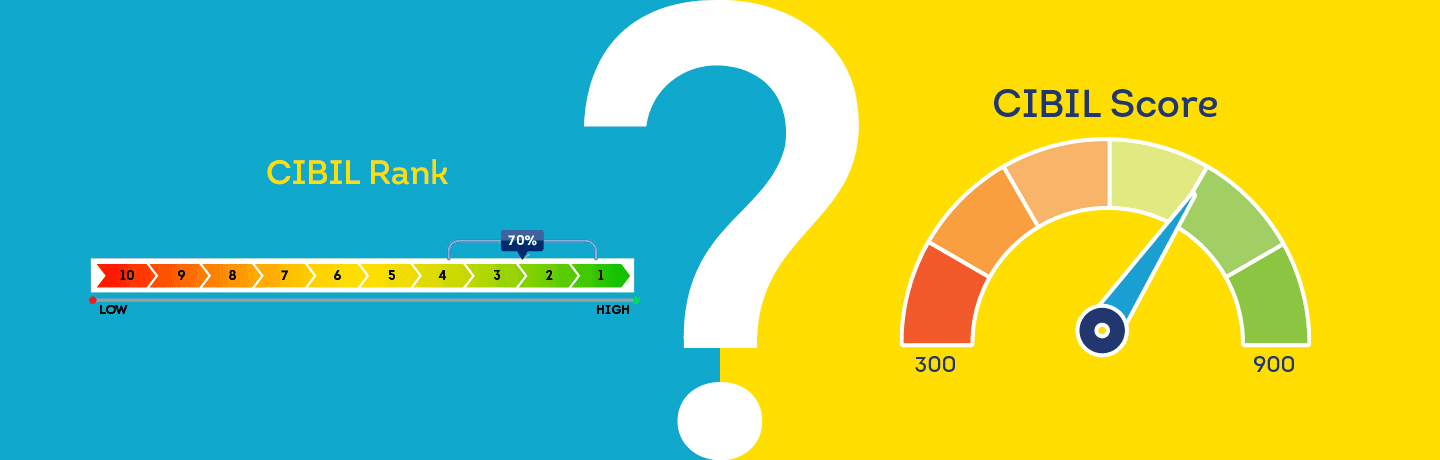
No CIBIL score does not mean no loan. Lenders look at your income and your bank statements instead if your Credit Information Bureau (India) Limited (CIBIL) report shows no score, because a missing score only means missing data, not bad credit. Digital NBFCs like Fibe read your salary pattern, your spending behaviour and your repayment discipline through this alternative scoring approach, which works well for salaried employees, self-employed applicants and first-time borrowers alike.
This guide explains what a missing CIBIL score actually means, how to apply for an instant loan without one, who qualifies, what the loan really costs and how a first loan can build your score from zero.
Table of Contents
- What Does a Loan Without CIBIL Score Really Mean?
- How to Get an Instant Loan Without CIBIL Score: Step by Step
- Who Can Get a Loan Without CIBIL Score?
- Options to Get a Loan Without CIBIL or Credit Score
- What a No-CIBIL Loan Really Costs
- Eligibility Criteria and Documents Required
- How Much Loan Can You Get Without a CIBIL Score?
- How a First Loan Builds Your CIBIL Score
- FAQs on Loans Without CIBIL Score
What Does a Loan Without CIBIL Score Really Mean?
A CIBIL report may show NH/NA when there is not enough qualifying credit information to generate a standard numeric score. TransUnion CIBIL explains that this can happen when you have no or insufficient credit history, no recent credit activity, or only add-on cards with no direct credit exposure. A borrower who is just beginning to use formal credit is commonly described as new-to-credit (NTC). NTC can overlap with an NH/NA status, but the terms are not identical.
NH/NA is not the same as a poor credit score. It indicates that a standard numeric score may not be available based on the information in the credit file. Read our detailed guide on what a -1 CIBIL score means for additional context on non-standard score/status outputs.
A low score is a different problem. A low score means the bureau has data, and that data shows missed payments or high usage. A missing score and a low score need 2 different approaches, so it helps to know which one applies to you before you apply anywhere.
The table below shows how CIBIL score/status bands are commonly interpreted. Actual lending decisions depend on each lender’s policy and the applicant’s overall profile.
| CIBIL Score / Status | Rating / Status | Typical Lending Interpretation |
|---|---|---|
| NH/NA (numeric score unavailable) | Limited or insufficient qualifying credit history | Assessment depends on the lender’s eligibility criteria and available applicant information |
| Below 600 | Poor | Low |
| 600 to 649 | Below average | Low to moderate |
| 650 to 699 | Fair | Moderate |
| 700 to 749 | Good | High |
| 750 and above | Excellent | Very high |
Checking your status takes about a minute and saves time later, because it tells you whether your report shows NH/NA or a numeric score, and helps you understand what information a lender may consider during eligibility assessment.
Check your exact score before you apply. Fibe’s free credit score checker pulls your live CIBIL report in under a minute and shows exactly what is helping or holding back your number.
How to Get an Instant Loan Without CIBIL Score: Step by Step
Complete the entire process online. Follow these 5 steps.
- Check your CIBIL status first. Pull your free credit report through a bureau’s website or a lending app’s free-check tool, such as Fibe’s. Confirm whether your report shows NH/NA or a numeric score, because lenders may assess applicants differently depending on the available credit information.
A quick check does not hurt your score. Pulling your own report counts as a soft enquiry, which leaves your score untouched. Read more on how CIBIL enquiries actually affect your score if multiple loan applications worry you.
- Gather your bank statement and digital payment history. Collect 3 to 6 months of bank statements. Add UPI transaction history and utility bill payment records if you have them, since lenders increasingly treat consistent digital payments and on-time bill payments as proof of financial discipline.
- Choose an RBI-registered NBFC. Reserve Bank of India (RBI) registered Non-Banking Financial Companies (NBFC) build their approval models around applicants with no credit history. Avoid any app that asks for access to your contacts or photo gallery, and always check the interest rate and every fee before you accept an offer.
- Complete your e-KYC. Keep your Aadhaar and Permanent Account Number (PAN) ready. Verification happens digitally in the app within minutes.
- Select your amount and tenure, then submit. Choose an amount you can repay comfortably. Fibe offers up to ₹10 lakh with a tenure of up to 36 months and 0 preclosure charges.
Fibe completes every one of these 5 steps inside the app. You do not need a branch visit at any stage.
Who Can Get a Loan Without CIBIL Score?
Three groups qualify most often for a no-CIBIL loan.
First-time or new-to-credit borrowers with NH/NA status. You may not yet have enough qualifying credit history for a standard numeric score, so lenders may consider income, bank data and other eligibility factors instead. Salary account statements work as the primary signal here.
Salaried employees in a new job. Your file looks thin if you joined your employer less than 12 months ago, even though you earn well. Providing 3 months of salary slips alongside your bank statements strengthens this kind of application considerably.
Self-employed and gig workers without an Income Tax Return (ITR). Freelancers and small business owners often show irregular income and file no ITR. Bank statement trends and transaction volume work as income proof here, which removes the need for a tax return.
Options to Get a Loan Without CIBIL or Credit Score
Borrowers without a CIBIL score have 4 main routes available, plus a smaller set of supporting options.
- Digital NBFCs. Digital NBFCs like Fibe skip the CIBIL check and assess income, bank data and employment stability instead. Approval happens in minutes because the entire process runs online.
- Secured loans. Loans against gold, fixed deposits or insurance policies use the asset as collateral, so your CIBIL score carries little weight in the decision.
- Peer-to-peer (P2P) lending. P2P platforms connect you directly with individual lenders whose criteria vary more than a regulated NBFC’s criteria do.
- Co-applicant or guarantor backed loans. Adding a co-applicant or guarantor with a strong credit history increases your approval chances and can unlock a larger amount.
A salary advance against your next payslip is a fifth, smaller option some employers and lenders offer, and it suits a short, small need rather than a larger purchase.
The table below compares the 4 main routes across the factors that matter most.
| Factor | Digital NBFC | Secured Loan | P2P Platform | Co-applicant Loan |
|---|---|---|---|---|
| CIBIL score needed | May vary by lender | May vary by lender and product | May vary by platform or lender | May vary by lender |
| Asset required | No | Yes | No | No |
| Typical interest rate | 14% to 36% per annum | 7% to 12% per annum | 18% to 40% per annum | Depends on co-applicant score |
| Approval time | Minutes | Same day to 1 day | 1 to 3 days | Minutes to 1 day |
| Asset at risk on default | No | Yes | No | No |
| RBI regulated | Yes | Yes | Partially | Yes |
Secured loans carry the lowest rate because the lender holds collateral. Digital NBFCs balance speed against a moderate rate, since they take on more risk than a secured lender does. Choose the route that fits your urgency and your appetite for putting an asset at risk.
What a No-CIBIL Loan Really Costs
The interest rate is only part of the cost. Two other factors change what you actually pay.
Processing fees reduce what reaches your account. A lender may charge this as a percentage of the loan amount, and it gets deducted upfront. The table below shows this effect on a sample loan.
| Loan Amount | Processing Fee (2%) | Amount You Receive | Amount You Repay |
|---|---|---|---|
| ₹20,000 | ₹400 | ₹19,600 | ₹20,000 plus interest |
| ₹50,000 | ₹1,000 | ₹49,000 | ₹50,000 plus interest |
| ₹1,00,000 | ₹2,000 | ₹98,000 | ₹1,00,000 plus interest |
Short tenures raise the effective annual cost. A flat fee on a 30 day loan works out to a much higher effective annual rate than the same fee would on a 12 month loan, because the fee gets spread over fewer days.
Lenders calculate your Equated Monthly Instalment (EMI) using this formula:
<math xmlns=”http://www.w3.org/1998/Math/MathML”>
<mi>EMI</mi>
<mo>=</mo>
<mfrac>
<mrow>
<mi>P</mi>
<mo>×</mo>
<mi>R</mi>
<mo>×</mo>
<msup>
<mrow><mo>(</mo><mn>1</mn><mo>+</mo><mi>R</mi><mo>)</mo></mrow>
<mi>N</mi>
</msup>
</mrow>
<mrow>
<msup>
<mrow><mo>(</mo><mn>1</mn><mo>+</mo><mi>R</mi><mo>)</mo></mrow>
<mi>N</mi>
</msup>
<mo>−</mo>
<mn>1</mn>
</mrow>
</mfrac>
</math>
Here, P stands for the principal amount, R stands for the monthly interest rate and N stands for the number of monthly instalments. Ask for the full rate and every fee in writing before you accept any offer, so the EMI you see matches the EMI you actually pay.
Eligibility Criteria and Documents Required
Most digital lenders, including Fibe, check 6 eligibility criteria.
| Criteria | Typical Requirement |
|---|---|
| Age | 21 to 55 years |
| Residency | Indian resident |
| Employment type | Salaried or self-employed |
| Minimum monthly income | Usually ₹15,000 or above |
| Bank account | Active account linked to Aadhaar |
| Mobile number | Active number linked to Aadhaar |
You need 5 documents in total to complete an application.
| Document | Purpose |
|---|---|
| Aadhaar card | Identity and address verification through e-KYC |
| PAN card | Tax identity and bureau linkage |
| Bank statement (3 to 6 months) | Income and repayment behaviour assessment |
| Salary slips (1 to 3 months) | Employment confirmation for salaried applicants |
| GST returns or business bank statement | Income proof for self-employed applicants |
No physical copies travel anywhere. Everything uploads digitally through the app.
Keep 3 risks in mind before you apply. Interest rates run higher on no-CIBIL loans because the lender cannot verify past repayment behaviour. Loan amounts start smaller for first-time borrowers because a track record does not exist yet. A missed EMI hurts your report because a missed payment creates a negative history where none existed before, so borrow only what fits comfortably within your monthly budget.
How Much Loan Can You Get Without a CIBIL Score?
The amount depends on your income, your bank statement stability and whether this is your first application.
| Borrower Profile | Typical Loan Range | Key Factor |
|---|---|---|
| First-time borrower, salary ₹15,000 to ₹25,000 | ₹5,000 to ₹50,000 | Bank statement stability |
| Salaried, 6 or more months of history, salary ₹25,000 or above | ₹50,000 to ₹2 lakh | Income level and employer type |
| Returning borrower with on-time repayments | Up to ₹5 lakh | Established repayment track record |
| Application with a co-applicant | Higher amounts possible | Co-applicant creditworthiness |
Fibe offers loan to borrowers who are new to credit considering multiple factors. Repaying your first loan on time unlocks a higher amount and a lower rate the next time you borrow.
How a First Loan Builds Your CIBIL Score
A first loan can start your credit history rather than simply solve a short-term need, if you meet 3 conditions.
The lender has to report to a bureau. Confirm this before you apply, because a lender that does not report to CIBIL, Experian, Equifax or CRIF High Mark builds you nothing, no matter how well you repay.
Every EMI has to land before the due date. A missed payment hits harder when you have no prior history to soften it, because there is no positive record yet to offset the miss.
Borrow only what fits your repayment capacity. A smaller loan you repay in full builds more trust than a larger loan you struggle to service.
Meet all 3 conditions for 12 months without a miss, and a score in the 650 to 700 range becomes a realistic outcome from a standing start of zero.
A loan is not the only everyday habit that shapes your score. Options like debit card EMI work the same way. On-time payments help, and a bounce hurts. See how debit card EMI affects your credit score for the full picture.
FAQs on Loans Without CIBIL Score
1. Can I get an instant loan without a CIBIL score?
Yes. NBFCs and digital lenders assess income, bank statements and employment stability instead of credit history. Fibe, an RBI-registered NBFC, approves applications through this alternative model, which makes funding possible even for a first-time borrower.
2. What is the difference between NA, NH and NTC?
NH/NA are status indicators that may appear when a standard numeric CIBIL Score cannot be generated because there is not enough qualifying credit information or there has been no recent credit activity. NTC means new-to-credit and refers to consumers who are new to formal credit. NTC can overlap with NH/NA, but the terms are not interchangeable. An NH/NA status does not by itself mean a poor credit score.
3. What interest rate can I expect for a loan without CIBIL?
Rates typically range from 14% to 36% per annum, higher than standard personal loans, because the lender cannot verify your past repayment behaviour. Rates fall as you build a repayment record through subsequent loans.
4. Do processing fees reduce the loan amount I receive?
Yes. A processing fee gets deducted upfront, so the amount credited to your account comes in lower than the sanctioned amount, while your repayment stays based on the full sanctioned amount. Always check this figure before accepting an offer.
5. What is the best loan app without a CIBIL score?
An RBI-registered NBFC with a fully digital process offers the safest and most predictable outcome. Verify any app’s registration before you share personal or financial details with it.
6. Will taking a loan without CIBIL affect my credit score?
Yes, positively, if the lender reports to a bureau and you repay every EMI on time. A missed payment works the opposite way and creates a negative mark where none existed before.
7. Can I get a short-term loan without a CIBIL score?
Yes. Several NBFCs offer tenures from 3 to 12 months without requiring a CIBIL score. Fibe allows preclosure at any point with 0 additional charges.
8. Can I get a ₹10,000 or ₹20,000 loan without a CIBIL score?
Yes. Smaller amounts approve most easily for applicants with no credit history, provided the applicant shows a stable income and 3 clean months of bank statements.
9. What is the minimum eligibility for a loan with no CIBIL score?
You need an age between 21 and 55 years, Indian residency, an active Aadhaar-linked bank account and a stable income source. Each lender sets its own income threshold, though steady income consistently improves approval odds across every lender.
10. How can I improve my chances of building a credit score from zero?
Choose a lender that reports to a credit bureau, pay every EMI before the due date and borrow only what your income can support. Following all 3 steps for 12 months typically moves a borrower from no score to a score in the 650 to 700 range.